Article body analysed
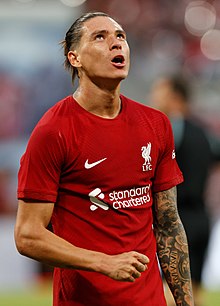
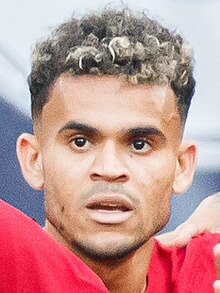
EPL Mohamed Salah's Outburst Photo: Getty Images; design: Eamonn Dalton Mohamed Salah used to be a man of few words. Since he joined Liverpool in June 2017, Salah has conducted only a handful of in-depth interviews with English-language media and taken part in barely any formal press conferences. When he does choose to speak, it is because he has something to say. Last November, he conducted a mixed zone with journalists, after scoring a late winner against Southampton, to express frustration at the stand-off over his new contract. Then, this past Saturday evening, came the thermonuclear detonation at Leeds United’s Elland Road, and his claims that he had been “thrown under the bus” by Liverpool, that his relationship with head coach Arne Slot was fractured and that he may have played his last game for the club. Advertisement In the space of a few minutes, Salah had made more headlines — and generated more stories — than many players do in a lifetime of such post-match interviews. The reaction has been predictably divisive. While many fans applauded Salah’s honesty and observed that he had a point in suggesting he had been scapegoated for Liverpool’s wretched form this season, others accused him of selfishness. Jamie Carragher, the former Liverpool defender, said on Sky Sports’ Monday Night Football that Salah’s behaviour on Saturday was a “disgrace” and had been choreographed to “create maximum damage” at Liverpool. “When he’s talking in the mixed zone, all he is talking about is ‘me, me, me’, ” said Carragher. This was the latest episode in a long-running spat between Carragher and the 33-year-old Egypt international, who in January responded to the pundit’s criticisms of his contract-related outbursts by posting on X that “I’m starting to think you’re obsessed with me”, followed by a winking face emoji. That post has now been viewed 22 million times. That number, and the reaction to Salah’s (admittedly explosive) comments in Leeds, underline his status not just as one of Liverpool’s greatest ever players, but as one of the world game’s biggest superstars, whose every word and action are pored over and analysed in the finest detail. So how does Salah usually choose to communicate with the wider world, and why does he make the choices he does? Salah has kept his counsel since last Saturday, with one notable exception. This came in the form of a selfie, taken in the gym at Liverpool’s training ground after he was omitted from the travelling squad for the midweek Champions League game away to Italian side Inter, posted on Tuesday morning. pic. twitter. com/Old Ws BHn Up — Mohamed Salah (@Mo Salah) December 9, 2025 The picture is apparently innocuous but the meaning seemed fairly clear: Salah wanted to remind the world that his dedication to training and keeping himself in the best possible shape was undimmed despite the ongoing furore over his future, as well as underlining his sense of abandonment on Merseyside. Advertisement It was typical of the kind of cryptic commentary that Salah often serves up on his social media channels to his 100million-plus social media followers. In January, he posted a picture of himself with Liverpool team-mates Trent Alexander-Arnold and Virgil van Dijk, when speculation over the trio’s futures was at fever pitch as they neared the ends of their respective contracts. Sometimes he doesn’t have to post at all to create intrigue. In October, there was a spike of interest shortly after Liverpool’s 5-1 Champions League win over Eintracht Frankfurt when followers noticed that Salah had changed the profile picture on his X account. Gone was the photo of him celebrating with last season’s Premier League trophy, replaced by one with his children. Salah began that match in Frankfurt on the bench and when he did come on with 16 minutes of the 90 to go, he drew criticism for shooting at goal from a tight angle rather than providing Florian Wirtz with an easy tap-in. The change of profile picture triggered a slew of articles speculating about his motivations. The Athletic has been unable to verify precisely when the photo was changed or why — Salah’s representative was approached for comment at the time — but while it may have been entirely innocent, subsequent events suggest it could have been a signpost for what occurred at Elland Road on Saturday. Similarly, there was his post in September reacting to a Liverpool fan account suggesting that summer signings Wirtz and Alexander Isak were vast upgrades on fellow forwards Luis Diaz and Darwin Nunez, who left the club in that same transfer window. Was that simply a defence of much-admired friends and team-mates, or an early pointer that all was not well in Salah’s own mind with how things were developing at Anfield? Maybe it was a combination of the two. How about we celebrate the great signings without disrespecting the PL champions? https: //t. co/l Rug6o FYCt — Mohamed Salah (@Mo Salah) September 3, 2025 The wider point is that Salah knows the value of his interventions and the weight his words carry. While he posts on social media himself — rather than delegating it — he discusses most of his online activity with Ramy Abbas, the Colombian lawyer who is his long-term adviser and friend. Advertisement Both men are aware of Salah’s reach. On the day he signed his latest Liverpool contract in April, Pro Data Stack — a service that pulls together performance metrics and useful extras such as social-media reach and sentiment — calculated that he was mentioned 151, 000 times across social platforms, reaching an audience of 121. 3million and generating 5. 6m interactions in just 24 hours. And while for most of his career, Salah’s posts can generally be divided into three reasonably trivial categories — look how fit I am (working out at the gym, on a medicine ball, or similar); look how talented I am (in-game action shots), and look how successful I am (holiday snaps where he is invariably shirtless, to more easily reflect all the hard work carried out in the first category) — he is now tackling subjects of far greater significance. In August, the death of Palestinian footballer Suleiman Obeid in an Israeli attack while waiting for humanitarian aid in the Gaza Strip prompted him to enter the world of geopolitics. When European football’s governing body, UEFA, posted a tribute to Obeid without mentioning the circumstances of his passing, Salah replied: “Can you tell us how he died, where, and why? ” That post has been viewed more than 130 million times, and made headline news across the world. Can you tell us how he died, where, and why? https: //t. co/W7HCy VVt BE — Mohamed Salah (@Mo Salah) August 9, 2025 The most famous Arab sportsman in the world remains one of football’s most marketable players — but while it is conceivable that part of Salah’s commercial appeal lies in how he has studiously avoided controversy, his intervention on Obeid proves that he is not oblivious to bigger issues. “Athletes at Salah’s level understand that their social voice carries enormous weight, and he may feel a responsibility to use it more meaningfully, ” says Chris Reeve, a social-media marketing expert. “It could also be a signal that he wants greater control of his own narrative. Perhaps too, as he enters into the twilight of his dazzling career, he is thinking about using his digital platforms differently in the future, so is really capitalising on the huge global attention being a player for Liverpool will give you. ” Charlie Rowing, a former social-media manager at leading Italian club Juventus, agrees. “As with all marketing, the more relatable it is, the more humanised it becomes, and the more reach it will have, ” Rowing says. “Perhaps after reaching that point where he feels like he now needs to express himself, he realises that, given his position and the number of followers that he has, he’s got the perfect platform to air his views and have people take notice. ” Advertisement For Liverpool, Salah’s remarkable social media profile — his Instagram account has 17 million more followers than the club’s official one — can be harnessed in useful ways. The defence of Diaz and Nunez, for example, was a far more eloquent expression of the team spirit that underpinned Liverpool’s title win last season than anything even head coach Arne Slot could have said on the issue. “What’s powerful in this case is the visible passion behind his response, ” says Matt Williams, a director at sports PR agency Keep Comms. “Fans don’t just want polished public-relations — they want to see their players care as much as they do. By defending former team-mates, Salah shows heart. It’s genuine, and it builds affinity. ” “He’s showing a lot of emotion, and clearly had a real bond with the players from last season, ” says Ash Jones, founder of Great Influence, the UK’s first dedicated personal branding agency. “Perhaps he also feels that he doesn’t get the full credit he deserves, not from Liverpool, but globally, and that’s why he uses the platform to share certain stats and achievements. It’s the way social media is going. Look at any other pillar of entertainment, and you’ll see a bit of a trend where people are more genuine and unfiltered. ” That was true of Salah’s response to the tragedy of Liverpool team-mate Diogo Jota’s death in a car crash in July, where he showed a vulnerable side most elite athletes keep hidden. I am truly lost for words. Until yesterday, I never thought there would be something that would frighten me of going back to Liverpool after the break. Team mates come and go but not like this. It’s going to be extremely difficult to accept that Diogo won’t be there when we go… pic. twitter. com/TIEzpj OABr — Mohamed Salah (@Mo Salah) July 4, 2025 Such incidents belie the idea that Salah is always simply looking out for himself in his public pronouncements. How active he will be in the times ahead remains to be seen, as uncertainty now hangs over his Liverpool career. But it goes without saying that his millions of followers — and many more besides — are studying his accounts with interest. Gregg Evans is a Staff Writer for The Athletic covering Liverpool. Previously he reported on Aston Villa and spent over a decade at the Birmingham Mail covering West Midlands football. His time with Villa included the drop into the Championship and then an incredible return to European football. He also covers golf. Follow Gregg on Twitter @greggevans40