Article body analysed
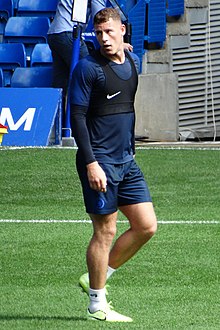
EPL Ross Barkley spoke to The Athletic in an hour-long sitdown interview Photos: Nigel French, Lynne Cameron, Chris Lee/Getty Images. Design: Kelsea Petersen After joining Everton aged 11, Ross Barkley started playing two years above his age and gathered a reputation. He won schoolboy trophies, presented by then-Liverpool manager Rafa Benitez, and played for England’s youth teams. Chelsea, Manchester United and Liverpool expressed an interest. Word went around Merseyside of a boy who was the latest player to come through Everton — the next Wayne Rooney. Advertisement Barkley did not mind at first. He targeted a senior debut at 16 in 2010, the same age as Rooney, and was close to doing so before suffering a triple leg break on England under-19 duty. Now 31, the Aston Villa midfielder cuts a different character to Goodison Park’s fresh-faced hope. Barkley, who has played for Everton, Chelsea, Nice, Luton Town and England, speaks with authority and thoughtfulness, willing to reflect and, at times, appear to regret aspects of his career. His well-publicised run-ins with alcohol, for example, serve as a touchpoint. It is why he has recently become teetotal. Did those stories create a perception of him and alcohol? “Yeah, it did, ” says Barkley. “I haven’t drunk since the summer. I’m planning on going without alcohol throughout (the rest of) my career. It has created situations I don’t really want happening anymore. “I’m a dad now; I’ve got more responsibilities. I’ve got maybe four, five, six or seven years left in football, so I want to make the most of that. Alcohol, for most people, can create problems — I’ve recognised that now. Without drinking, it doesn’t create any situations. You can be clear-minded every day and it doesn’t affect you mentally. There are a lot of benefits to not doing that. ” In a small room behind the main media suite at Bodymoor Heath, Villa’s training ground, Barkley sits down with The Athletic. It is two days after returning to Merseyside to face the red half of the city, an experience, for an Evertonian like Barkley, that has never been particularly warm. Villa lost 2-0, yet for the 31-year-old, who came on as a second-half substitute, broader positives can be taken. After all, he is back playing and entering into the next phase of a career that has had more adversity and scrutiny than most. The following week, Barkley scored in the 4-0 home victory over Bournemouth. Advertisement The celebrations felt telling: substitutes and players huddled around him by the corner flag, recognising how important and personal the goal, which was his first since January, was to him. Barkley had missed the first two months of the campaign due to what his manager, Unai Emery, described as a “personal issue”. For roughly an hour, Barkley sits down with The Athletic to discuss his story, from childhood to present day, and the challenges he has faced, on and off the pitch. This includes: “A few times I went out, and if you drink too much, you do things you regret, ” Barkley says. “I’d go out and have too much to drink, and then it would get back to the club. One time, I went out on a Sunday in Liverpool and we had a game on a Wednesday. I got videoed, and then it was in the paper. “We (Chelsea) had an away game in France (against Lille) and Frank Lampard was the manager. He couldn’t really say too much to me, other than learn from it and pick and choose when the right time is to do it, because he knew what it was like as a young lad. “But the punishment was that I travelled with the team, but I wasn’t on the bench. I had to watch the game on the coach. It was hard to take. “That was one occasion that has probably created a perception. ” Football has, and still can be, a macho sport, yet Barkley, on the theme of mistakes and alcohol, broaches the subject himself. “You’ve got to self-reflect, ” says the midfielder. “You make mistakes. It’s good to speak to people and learn from mistakes and understand that throughout life, there are going to be challenges. Sometimes people struggle with their mental health; it’s good to talk to people. I’ve spoken to people, and it’s helped me. “I’ve spoken to a sports psychologist. I’ve had therapy throughout my career and it’s beneficial. In football, you can lose your confidence. I’ve lost my confidence when I was younger. Now I’m 31, I look back and wish my approach back then was the same now. ” Advertisement Barkley was a young man from a council estate in Wavertree, a district and suburb of Liverpool, with a complex family situation and afflictions that followed him. He used football as a vehicle to give his mother, Diane, from whom he took his surname, and his sister a better life. His partner, Katherine, gave birth to a baby boy last December. Barkley believes becoming a father has shifted his perspective, allowing him to “look at things differently now”. “I was brought up with a single parent, ” he recalls. “My dad (Peter) was in and out of my life from a young age, but they drifted apart. It would be my mum and my sister. “My mum was on benefits, so it was a difficult upbringing. I come from a small family. Football was my way of making our lives better. I put all my energy into football from a young age. My mum put belief into me that I was the best in my age group. I was on the bench for Everton’s first team at 16, and I was able to buy my mum a house. Life then got a little bit better for my mum and sister and easier for us financially. ” Barkley says he enjoyed his childhood despite family struggles and financial limitations. He looked forward to school and was helped by Wavertree, a popular residential area for young people, being enriched with sporting facilities. Barkley fondly recalls the Olympic-sized swimming pool nearby, as well as the athletics track, tennis courts and football pitches, where he would spend 12 hours a day during school half terms — “that was my escape, ” he says. “My mum didn’t have much support from family, ” Barkley adds. “Her mum passed away when she was six, and she had some difficulties throughout her youth, and then getting older. But we made the most of what we had. I still had a good upbringing. ” It was to no one’s surprise that Barkley’s role model was Rooney. He too was an Evertonian, a bold, daring youngster who, even within an academy system, never lost those, as Barkley describes, “street-smarts”. Advertisement Everton knew the talent they had and, crucially, were aware of the complexities at home. “It was difficult, ” he says. “I’d have to get two buses, sometimes three, to training. I’d have to wait outside the training ground. It could be 9pm, just waiting for a bus on my own to get back home because my mum had to mind my little sister, who is seven years younger. “This was character-building for me. Once I got to a certain age, Everton would help financially with taxis and my coaches would drop me home after training. One of my team-mates, John Lundstram, who’s now at Hull City, had his parents drop me back and forth. Duncan Ferguson also did it a few times and he’d even come in — it’d be 10pm and he’d be having a cup of tea with my mum. ” How did Barkley’s mates react when they saw Ferguson, the former legendary Everton forward, pulling up outside? “Dunc would come back late at night, so there wouldn’t be that many kids, ” he smiles. “He grew up on a council estate in Scotland, so he saw some similarities with me. When I broke my leg, David Moyes came round. He wanted to reassure me that the club were going to do everything they could to get me back where I was and progress into the first team. ” Barkley can recall that afternoon vividly. “It was around 2pm and he turned up in a nice car. It was half-term and there were 20 or 30 kids outside our two-bedroom house. They would all be looking through the windows, trying to see Moyes. “I appreciated that he took the time to be with me and my mum. He actually paid for me to go on holiday — I’d never been on holiday before that. Me, my mum and sister went to Tenerife to have a mental break. ” The 33-cap England international says Everton’s coaches and players, including former defender Alan Stubbs, became one collective father figure. He keeps in touch with most today. Advertisement Barkley talks about only feeling the strain once he played for England at 19 against Moldova in 2013, which propelled him into broader public focus. Before then, he took pleasure in being spotted walking around Liverpool or going to the cinema. As a local lad done good, he had the goodwill of Merseyside — or half of it, at least. Gradually, this started to change as the level of fame, and thereby the heat of the spotlight, grew. Following a 4-2 win against Leicester City in 2017, CCTV footage showed Barkley being punched twice by a man in a nightclub in what his lawyers called “an unprovoked attack”. “There was a lot of pressure from the fans to maybe be that Steven Gerrard (former long-standing Liverpool captain) figure at Everton, which I wanted to be, ” Barkley insists. “It started to affect me because I felt like I couldn’t breathe in the city. “When I was young, I was quite closed off. I didn’t really trust many people, like I do as I’ve got older. So I only stuck with my friendship group. I didn’t let other people in. I didn’t want people to have access to me and say certain things about what I’m like when I go for a meal or go on a night out. I didn’t want any of that. “Nowadays, with people and their phones, you’re a little bit on edge. If you’re going for some food or in a coffee shop, people point their phones at you. I wouldn’t be bothered if they asked for a picture. ” At 24, Barkley moved to Chelsea for a fee worth £15million ($19. 7m), prompting a painful and acrimonious departure from his boyhood club. By this stage, Moyes had left and Everton were veering in another direction. Barkley had been out injured for the first half of the 2017-18 season and was entering the final six months of his existing deal after rejecting an extension. “I was crying, ” he says. “I wasn’t sure whether I wanted to stay at Everton for life, or if I needed to get away from my comfort zone. Advertisement “I cried about leaving because of my love for the club. It changed my life. The support from everyone coming through — from the fans, to the staff who were father figures, to the kit men who I’d be in their room every day having banter, but then knowing that Everton weren’t going to have me in my prime, was difficult. “But I had to make a decision because when I left, Everton were dipping. It was a little bit toxic at that point. There were lots of signings coming in and not doing so well. There was just so much change in a short space of time. “Being away from my mum, sister and friends helped me grow. Maybe I wouldn’t have grown the way I did if I had stayed at Everton. Coming away from Liverpool to walking around London, the odd taxi man would put his thumb out the window, but because everyone’s rushing about, I could just walk about and be in my own space. ” Barkley recounts his mother’s hope of him staying at Everton and, more latterly, explaining that the sentiment has eased among Everton supporters. They are more welcoming when they spot him having coffee with his mum and he recalls the fans who say they would want him back one day. Those initial years after leaving Everton, however, wounded Barkley. Someone who had once revelled in the good wishes was on the receiving end of stinging criticism from Everton fans. “I remember being back home and in my car at the traffic lights, ” he says. “Fans would be shouting at me. There was one time when a man had his kids in the back and his missus next to him. He was driving, but put his window down to shout things at me. ” Moving to London may have eased the intensity he felt in Liverpool, but it invited further complications. As he says himself, “There is always something to do every night in London. ” Temptations to go out and drink heightened with every week he was not starting games or would be training well, only to be left out again. The sense of jeopardy that came in Liverpool started to arrive in London. Advertisement “When I joined Chelsea, I knew every year they were going to sign top players, ” Barkley says. After signing for the west London club, he would go on to make just 14 league starts over the next 18 months. “But I hated being on the bench. I’m a player who, if you want me to be at my best, I need to feel important to the squad. If I’m on the bench, then I (need) communication. If there’s none, it’s hard for me to be at my best. I’m a big lad, so if I’m not exposed to minutes, I lose confidence in my body. If I come on for 10 minutes and because I’ve got asthma, I start to question, ‘Am I not fit? ’. “There was always competition in the midfield and, at times, I’d get frustrated. With that frustration, I’d start to go out, and went out more than I would have if I were playing more. My frustration would need to go somewhere else, so I started to enjoy going on a night out with my friends at the wrong time. ” When asked if there is one particular moment in his career he wishes he had done differently, Barkley pauses. “I scored in three consecutive games for Chelsea, ” he says, reflecting on one specific period in October 2018. “I was in the team and was doing everything right. At that point, I should have stuck with what I was doing and carried on with my consistency and my sleep. But I didn’t have a partner. I was on my own in London, and my mum couldn’t come down often, so it was hard. So maybe a different approach to when I joined Chelsea, managing my professionalism outside of football. ” Barkley is now looking forward with Villa. His career has been a story of early highs, obvious lows, and, as he proudly remarks, having watched a compilation clip online, “The Ross Barkley Remontada” — the Spanish term for comeback. Barkley is referring to his return to England before the 2023-24 campaign, following a miserable spell in France with Nice. He was reinvigorated at newly-promoted Luton, enjoying an exceptional year personally. Invariably fighting against the odds, Luton’s eventual relegation was not due to the want of trying; Barkley was undoubtedly the club’s standout performer, making 32 league appearances and notching nine goal contributions. Advertisement “My love for football has always remained, ” he says. “A lot of players in my position could have ended up in the Championship and then drifted, maybe falling out of love with the game, or being in League One. No disrespect, but I’ve always been in the Premier League, so I was happy. It showed mental resilience to be able to go again. ” Even though Barkley has endured challenges in the Midlands since moving permanently in July 2024, he maintains a good relationship with Emery, who, in preparation for signing him from Luton, watched 12 of his games. “He’s clear, ” Barkley says. “He doesn’t bulls**t. He loves me as a player. He saw me at Luton and was like, ‘How did you go down your career path? ’. From leaving Chelsea to go to Nice, then from Nice to Luton — he couldn’t understand it. He said my talent shouldn’t have had the career path I’ve had. But sometimes, certain decisions you make throughout your career, maybe outside of football, affect that. ” Barkley harbours ambitions to represent England again. His last appearance came in 2019, when he scored twice and assisted one against Bulgaria. First, though, Barkley’s focus is on Villa. In an hour where Barkley has mostly looked back, he now intends to look forward. “I could have done things differently, but I feel everything’s made me become a better person, ” he concludes. “The best thing was making my debut for Everton, as well as my debut for England. That was a dream. “Now, I’d like to win a trophy at Villa, because the manager’s time at the club deserves it, and the team deserve to play in the final and win a trophy. ” If you would like to talk to someone after reading this article, please try Samaritans in the U. S. or the UK. You can call 116 123 for free from any phone. Spot the pattern. Connect the terms Find the hidden link between sports terms Play today's puzzle Jacob is a football reporter covering Aston Villa for The Athletic. Previously, he followed Southampton FC for The Athletic after spending three years writing about south coast football, working as a sports journalist for Reach PLC. In 2021, he was awarded the Football Writers' Association Student Football Writer of the Year. Follow Jacob on Twitter @J_Tanswell